
Technical Overview for Digital Preservation and Access at DKU Library

Introduction

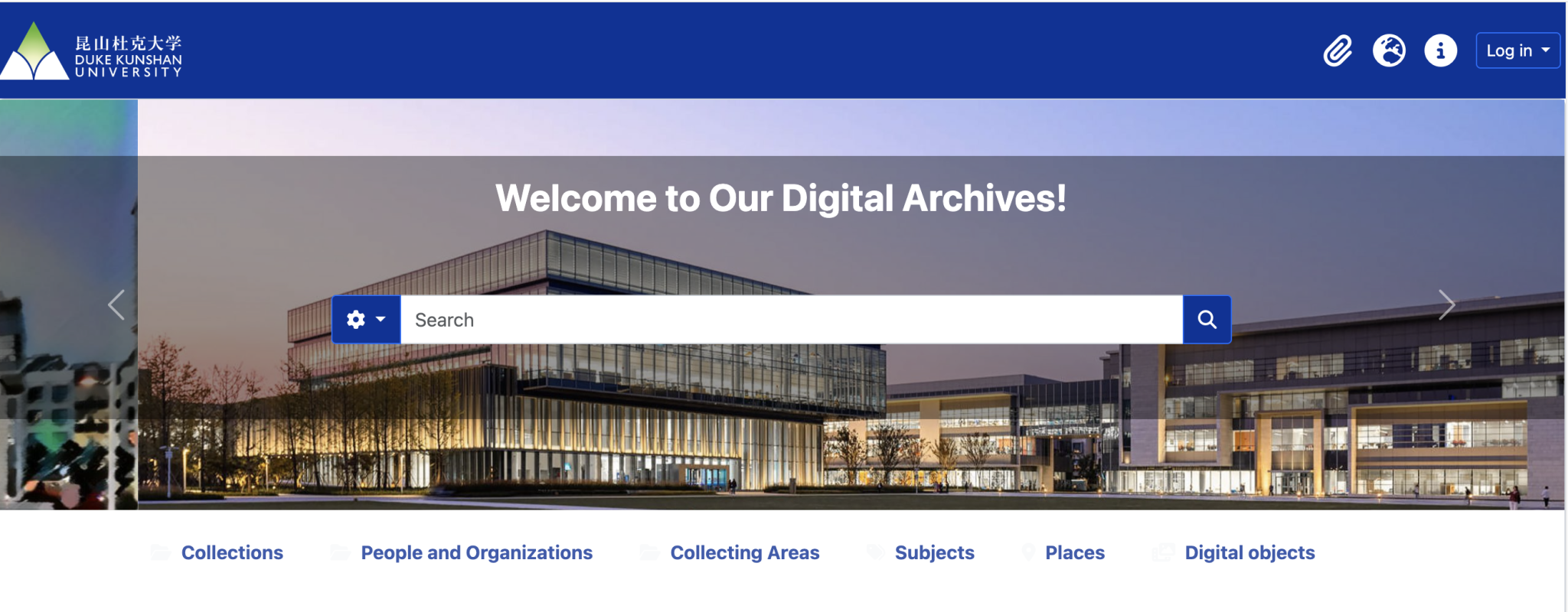
Duke Kunshan University (DKU) Library is committed to safeguarding the long-term accessibility, authenticity, and usability of its digital assets in the DKU Archives and Special Collections, including digitized collections, born-digital records, and digital projects. The current DKU Library preservation and access framework is built on two open-source systems: Archivematica and AtoM (Access to Memory) .
System Selection

After carefully evaluating both commercial and open-source solutions, DKU Library chose Archivematica and AtoM. This decision was guided by several key considerations:

  1. Standards Compliance
    • Archivematica and AtoM comply with the OAIS (Open Archival Information System) reference model and support widely adopted metadata standards such as RAD, ISAD(G), and Dublin Core, ensuring interoperability with global archival practices.
  2. Integrated Workflow
    • The two systems are designed to work together seamlessly, providing DKU Library with an end-to-end digital preservation and access pipeline. This integration is particularly valuable for a library operating with a small but highly skilled team.
  3. Community and Accountability
    • Archivematica and AtoM are open source, community-driven, and mature solutions, with more than a decade of development history. They are trusted by institutions worldwide, including Archives Canada, University of Pennsylvania, and Simon Fraser University. Their global adoption demonstrates reliability, transparency, and accountability.

System Development Process

This project was approved in February 2025. From February to May 2025, DKU Library completed a comparative review and selected AtoM and Archivematica. With strong support from the DKU Office of Information Technology, a cross-functional team led by Mengjie Zou, University Librarian, and Gary Li, Senior Director of Information Technology, was found to work on the project. The core team members included Tim Wang, Project Manager II – IT (Infrastructure), and Sam Ma, System Engineer IV, from DKU IT, and Ryder Kouba, Archives and Special Collections Librarian, and Xueying Cheng, Systems Librarian, from DKU Library, combining platform expertise with archival practice.

From June to August 2025, the team executed the production build-out: standing up AtoM and Archivematica in test, validating DIP (Dissemination Information Packages) → AtoM and Storage Service integration, configuring SSO with group-based permissions, completing AtoM theme customization, and running end-to-end workflow testing (Transfer → Ingest → AIP/DIP). The project was deployed to production on 30 July, completing data import, documentation, and UI refinements, and launch preparation. After continuous preparation, the AtoM portal went live on 31 August 2025, concluding the development phase.

Standards and Frameworks

DKU Library’s digital preservation program is informed by internationally recognized standards and best practices including the following:

  • OAIS – Open Archival Information System reference model
  • METSPREMISDublin Core – metadata standards for description and preservation
  • BagIt – packaging and integrity validation standard
  • RAD / ISAD(G) – archival description standards

Workflow

To ensure the long-term preservation and usability of digital records, DKU Library follows a structured workflow:

  1. Ingest – Transfer digital materials, generate checksums, run virus scans, and identify file formats.
  2. Normalization – Convert files to sustainable preservation formats (e.g., PDF/A, TIFF, WAV, MKV/FFV1).
  3. Packaging – Generate AIPs (Archival Information Packages) enriched with descriptive and preservation metadata.
  4. Storage – Place AIPs in secure, redundant storage with regular fixity checks.
  5. Access – Create DIPs (Dissemination Information Packages) and publish them via AtoM for discovery and use.

Infrastructure and Integration

To ensure sustainable, scalable, and auditable preservation and access, the infrastructure follows principles of resilience, integrity, interoperability, and least privilege, tightly integrated with campus identity services:

  • Redundant and secure backup storage with integrity monitoring to ensure data is protected against corruption, loss, or unauthorized modification
  • Metadata-rich environment to guarantee discoverability, interoperability, and long-term sustainability
  • Authentication and access control: Single Sign-On (SSO) integration ensures that sensitive or restricted materials can only be accessed by authorized groups, while public users can still access open content

Future Directions

Digital preservation is an ongoing commitment rather than a one-time project. DKU Library will continue to strengthen and expand its program in the following areas:

  1. Metadata Enrichment
    • Enhance descriptive, technical, and preservation metadata for better discovery, context, and reuse.
  2. Campus-wide Engagement
    • Provide training and guidelines for faculty, staff, and students on best practices for managing and transferring digital records.
    • Promote awareness of the importance of long-term access to digital scholarship and institutional memory.
  3. Content Access and Permission Management
    • Expand the use of SSO and group-based permissions to provide granular access control, ensuring authenticated users and the public can access content at appropriate levels.
    • Develop flexible workflows to balance openness with privacy, confidentiality, and compliance requirements.