
Many people’s understanding of Kunshan begins with its ancient water towns and bustling daily life. However, in the exhibition Where Waters Remember: Kunshan in Qian Li’s Pen Drawings, one sentence is particularly moving: “Begin with a single seed. Look down to the land, then forward through time”. During the exhibition’s preparation, we collected information on nine important archaeological sites in Kunshan. Driven by curiosity, we decided to conduct field investigations and photograph their current conditions.
Most of these nine sites are scattered along the edges of lakes, fields, villages, and roads. Unlike traditional tourist sites, they are mostly marked only by small stone steles standing in fields or at village entrances. Standing before these steles, we see no grand ancient monuments in sight, only quiet rice paddies, residential houses, and country roads. Yet, the soil beneath our feet is not empty; it holds layers of life covered by time: 6,000-year-old rice paddies and house foundations, elevated earthen platforms and jade artifacts from the Liangzhu period, city ruins and burial areas from the Han dynasty, and bronze tool fragments from the Spring and Autumn period. These remains connect Kunshan’s development from prehistoric settlements and rice farming to later urban life and social transformations.
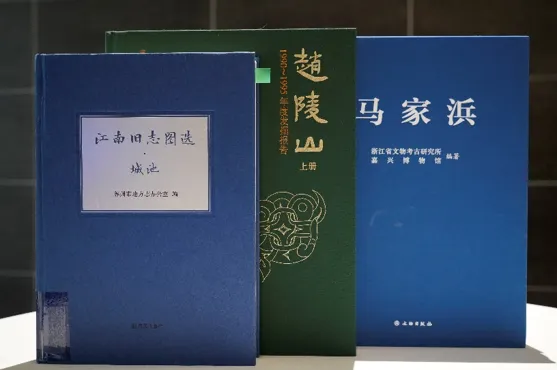
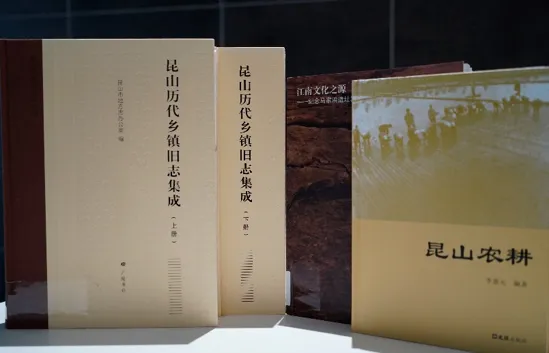
To accurately present the chronological sequence and archaeological significance of these sites, we conducted systematic desk research in the early stages of preparing the exhibition panels. First, we organized the development of prehistoric cultures—Majiabang, Songze, Liangzhu, and Maqiao—alongside the corresponding site lists to structure the narrative framework for the “Land and Civilization” chapter.
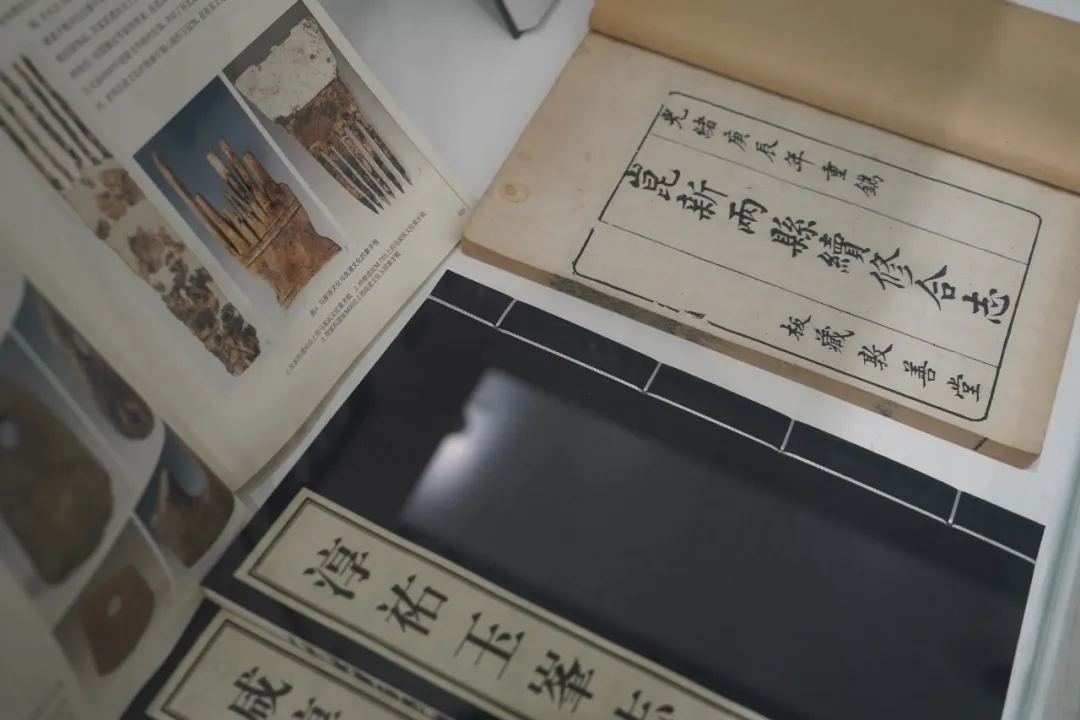
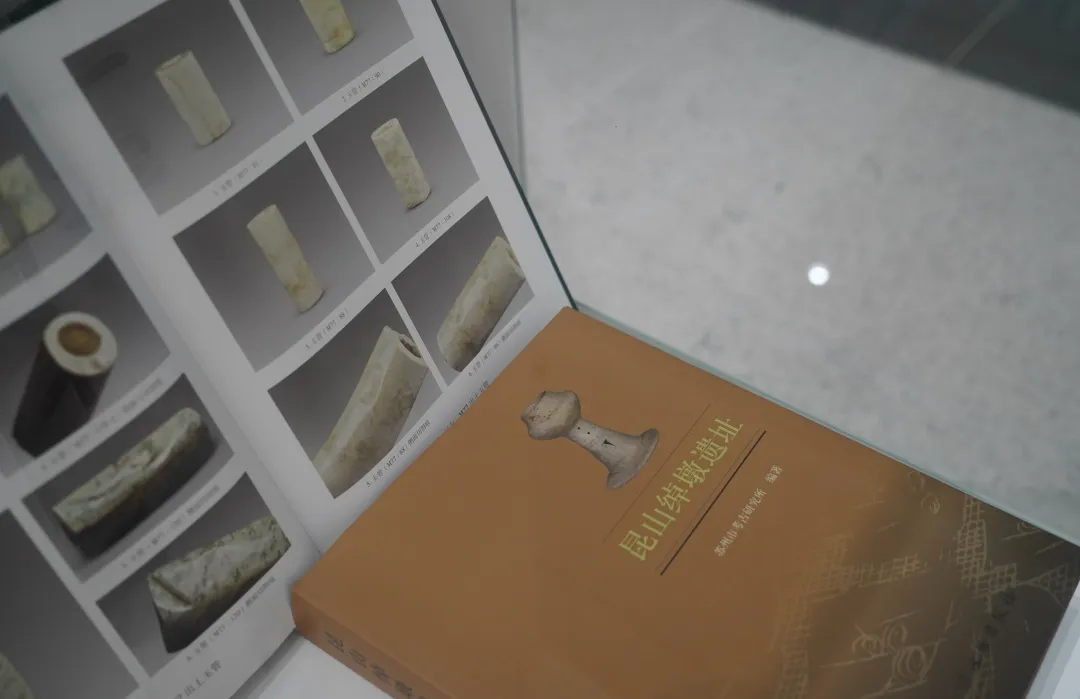
Collection exhibits from “Where Waters Remember: Kunshan in Qian Li’s Pen Drawings”
We reviewed local gazetteers to confirm the historical names and spatial boundaries of the sites. We also focused on agriculture and the everyday life of water towns, providing historical records on the development of the rice-farming civilization. Furthermore, we studied archaeological compilations and thematic research to better understand the eras and significance of different remains, such as jade artifacts, city sites, and water forts.
Prehistoric Cultures and Rice Farming in Kunshan
Kunshan lies on the Taihu Plain, a region dense with rivers and lakes. Long ago, people settled by the water and cultivated the fertile land. The exhibition categorizes Kunshan’s prehistoric development into four successive stages: Majiabang, Songze, Liangzhu, and Maqiao. Over time, these agricultural settlements evolved into more complex societies, making this region one of the earliest centers of civilization in East Asia.
To establish clear “time coordinates” before introducing the nine sites, we categorized them into these four stages:
- Majiabang Culture (c. 6,000 years ago): This stage marked the beginnings of rice farming and settled life. Discoveries at the Chuodun Site—including house foundations, ancient rice paddies, stone tools, and pottery—show that agricultural production was already quite mature.
- Songze Culture (c. 5,500 years ago): Rice farming remained the foundation of life, alongside animal husbandry, fishing, and hunting. Handicraft techniques continued to improve. Notably, differences in cemeteries and burial goods appeared, suggesting early social inequality. The Shaoqingshan, Chuodun, Zhaolingshan, and Jiangli sites all correspond to this stage.
- Liangzhu Culture (c. 4,500 years ago): As agriculture provided more abundant resources, pottery and jade craftsmanship developed highly, and large-scale public works and ritual spaces (such as irrigation systems and earthen platforms) emerged, leading to a more complex social structure. The high platforms, jades, and sacrificial remains at Zhaolingshan, the village and ritual remains at Shaoqingshan, and the “settlement center” indicated by Zhumucun can all be understood in this context.
- Maqiao Culture (c. 3,000 years ago): Influenced by natural disasters, development in this period did not progress linearly, but settled life continued. Chuodun yielded wells, ditches, and various tools; Huangnishan yielded bronze arrowheads, pottery, and stamped-pottery fragments, providing artifact clues for this stage.
Chuodun Site: The Starting Point of Civilization from Rice Paddies
Located in Chuodun Village, Bacheng Town, between Kuilei Lake and Yangcheng Lake. The site preserves remains from the Majiabang, Songze, Liangzhu, Maqiao, Tang, and Song periods, making it one of the most complete prehistoric sites in the Taihu region, and has yielded earliest archaeological traces of rice paddies.
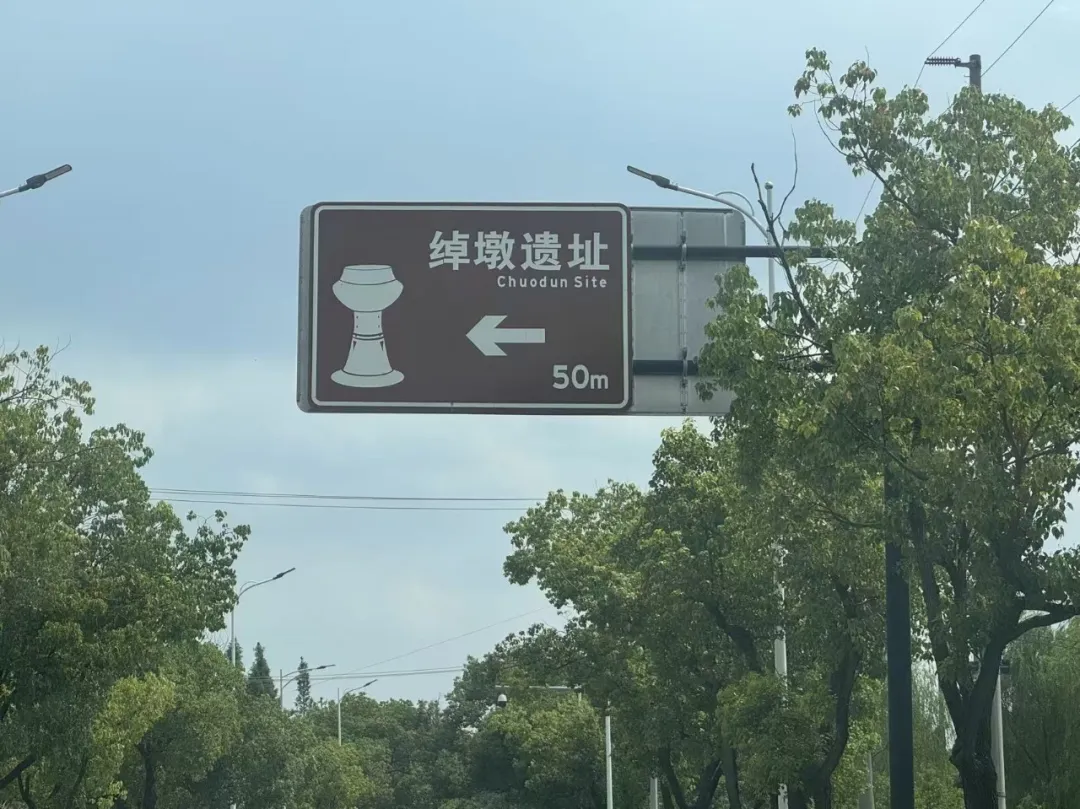
In the Majiabang Culture stratum, dating back about 6,000 years, archaeologists discovered irrigated rice fields, houses with separate living and cooking areas, as well as various stone tools and pottery. This tangible evidence shows that rice farming was already well established in the Kunshan region 6,000 years ago, and that early inhabitants had adopted a stable, organized, and settled life.
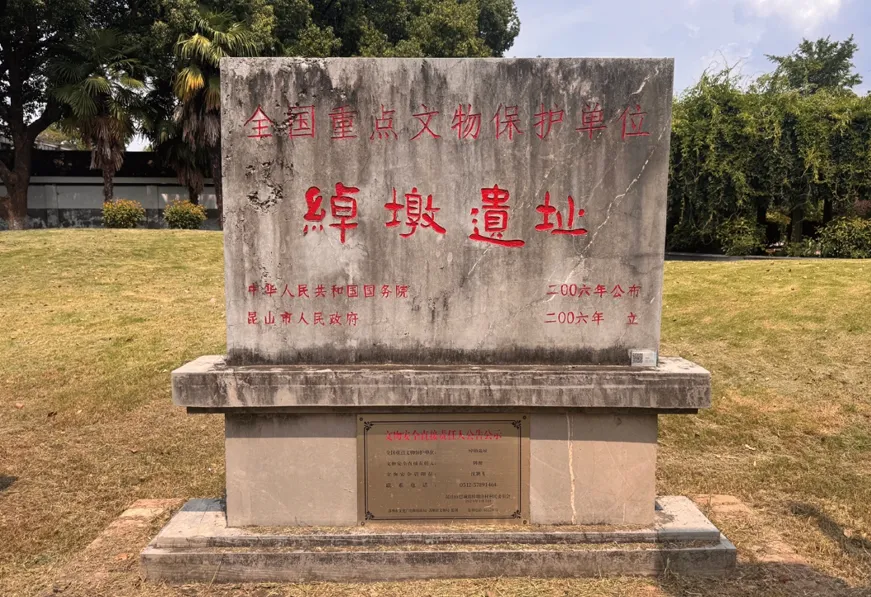
Remarkably, everyday life at Chuodun was never easily interrupted. During the Maqiao Culture period about 3,000 years ago, despite the impact of natural disasters, the early inhabitants continued their settled communities there. Excavations at the site yielded wells and ditches, along with pottery, stone, bronze, and bone tools used for dining, storage, cooking, craft production, fishing, and hunting. These findings vividly illustrate the daily life scenes of the society at that time.
Zhaolingshan Site: High Platforms, Jades, and Sacrifices
Located in Zhaoling Village, Zhangpu Town, this is a large earthen platform site of the early Liangzhu Culture. It yielded jade cong, jade yue, and sacrificial remains, representing an early Liangzhu settlement.
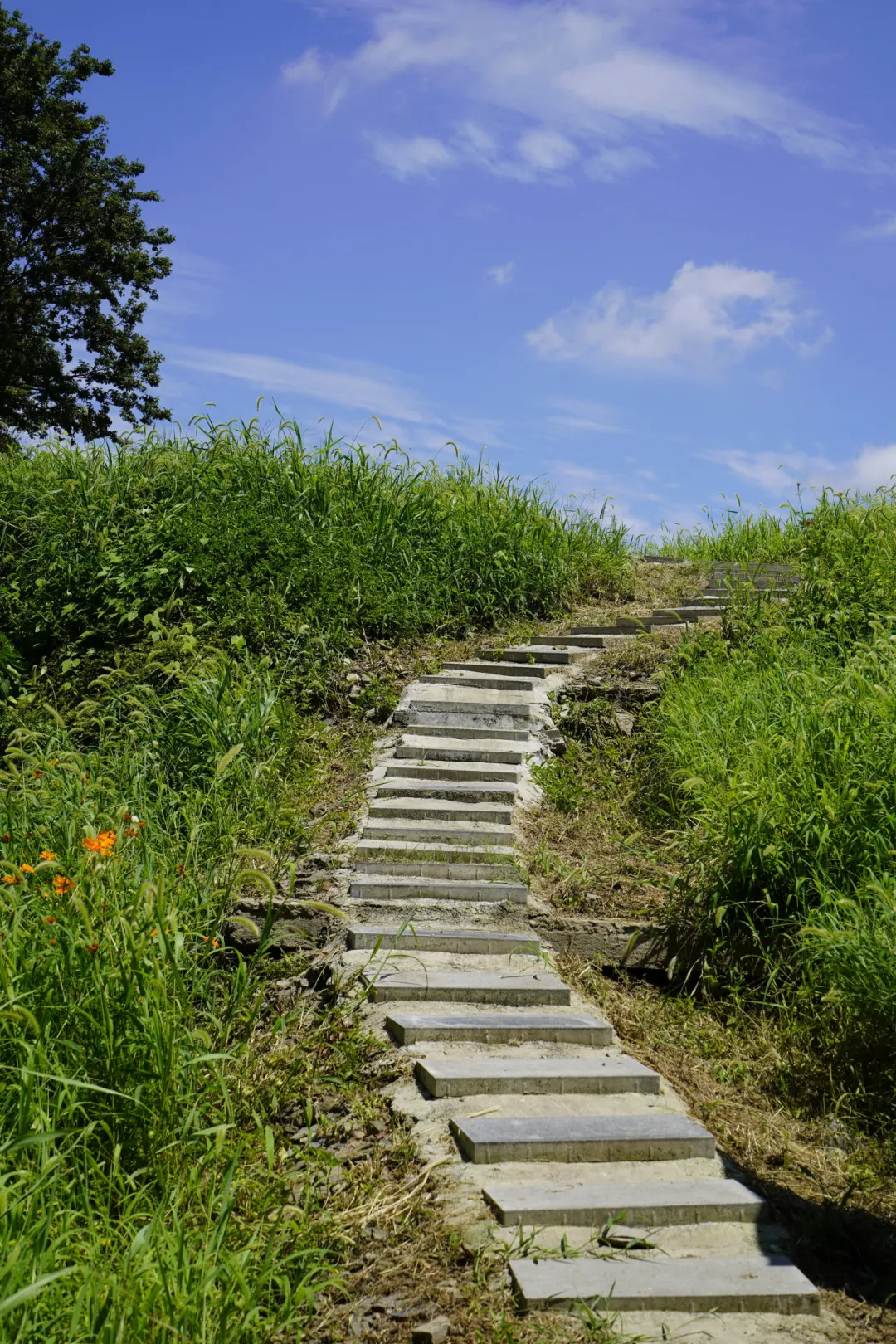
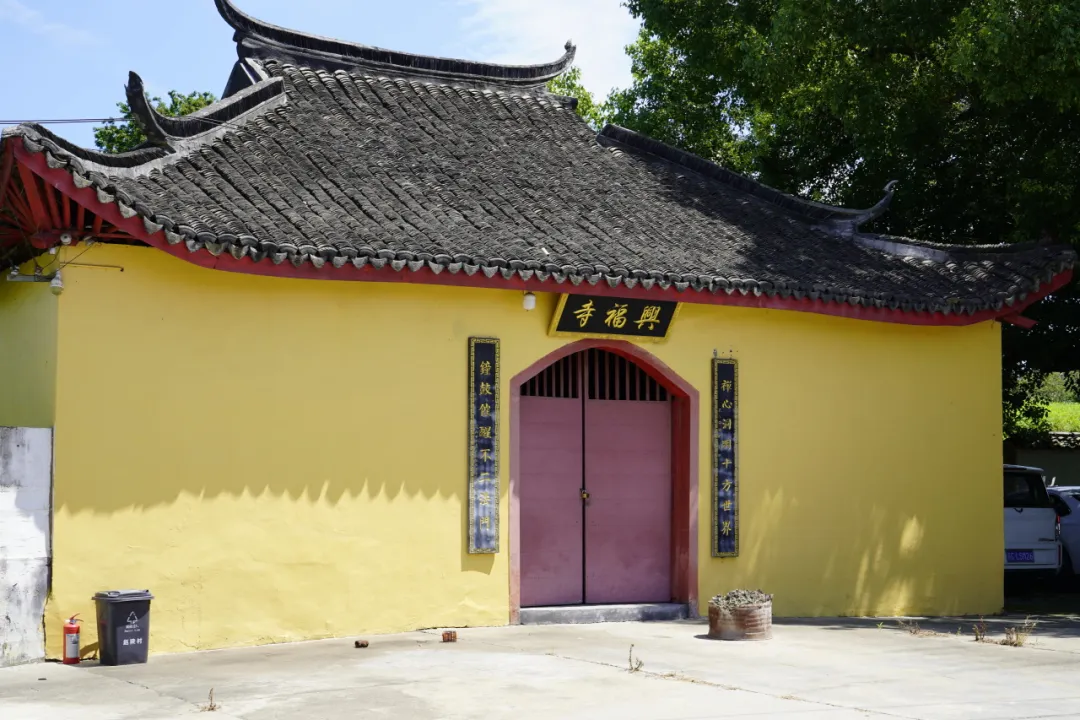
Taken around the Zhaolingshan Site
It is hidden at the end of a village path. Walking through the alley, one first sees a temple. Beside the temple, a stone path is concealed in the grass. Following the path up the hill, the stone stele of the Zhaolingshan site stands quietly by the path.
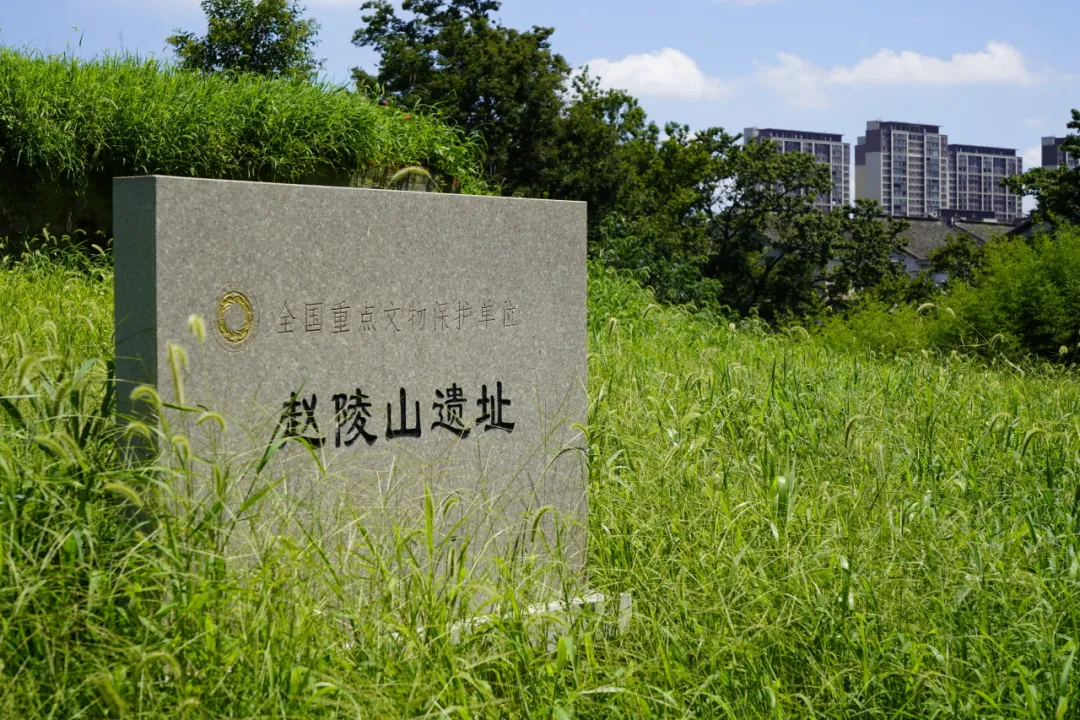
If Chuodun shows us “the origin and development of rice farming civilization,” Zhaolingshan illustrates “how society became complex.” The exhibition notes that during the Liangzhu period, agricultural growth supported greater wealth, while highly sophisticated jade craftsmanship and large ceremonial platforms reflected a more complex and stratified society. Zhaolingshan’s earthen platforms, jade ritual objects, and sacrificial remains are concrete manifestations of these changes.
Shaoqingshan Site: Coexistence of Village Life and Ritual Space
Located northeast of Qiandeng Town, this Liangzhu Culture site yielded 19 jade objects, as well as house remains, a village, earthen platforms, and sacrificial pits. Today, it lies within Shaoqing Garden, a quiet refuge amidst a bustling village. Upon entering this tranquil space, the heritage stone stele is immediately visible beside the gate.
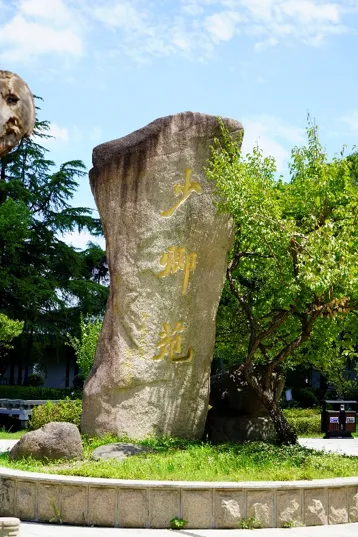
Taken at Shaoqing Garden near the Shaoqingshan Site
Additionally, the exhibition’s overview of the Songze Culture (c. 5,500 years ago) notes that artifacts from Shaoqingshan, Chuodun, Zhaolingshan, and Jiangli reveal a lifestyle centered on irrigated rice farming, supplemented by livestock and fishing. Pottery technology matured, stone tools improved in quantity and quality, and centralized cemeteries with varying burial goods emerged, marking the beginnings of early social inequality.
Taishidian Site: Continuation of a Waterside Settlement
Located in Wangdong Village, Zhouzhuang Town, this settlement site was occupied from the Neolithic period through the Song Dynasty, yielding artifacts from successive eras.
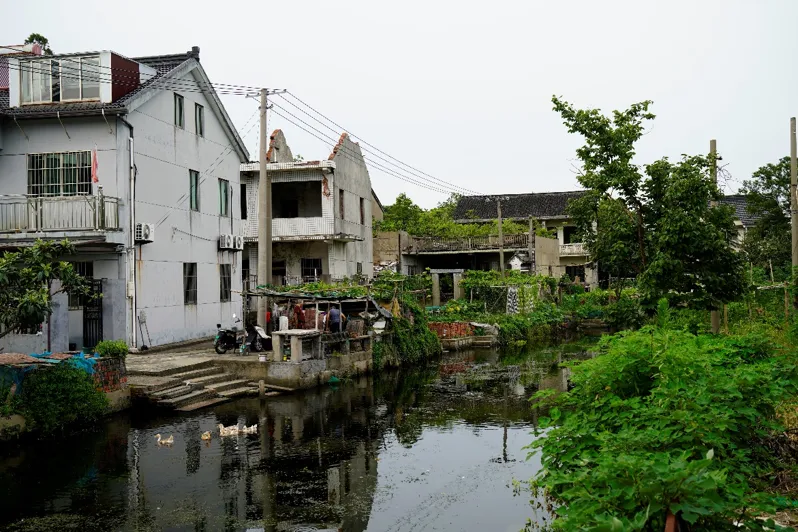
This site perfectly illustrates the relationship between water networks and human settlement. As the exhibition notes, Kunshan lies on the river-dense Taihu Plain. Early inhabitants settled here over 6,000 years ago, and over time, their agricultural villages evolved into complex early civilizations. Rivers and lakes provided vital resources and shaped local transportation and settlement patterns. The continuous occupation of Taishidian from the Neolithic period through the Song Dynasty highlights just how crucial these waterside environments were for long-term survival.
Jincheng Site: Spatial Order of Han Dynasty “City and Tomb”
Located in Luxiang Village, Huaqiao Town, this important Han-dynasty city site features an urban area to the north and a burial area to the south. Trial excavations in 2008 yielded various Han artifacts.
Among the nine sites, Jincheng represents a distinct shift from prehistoric settlements. The emergence of a true “city” signifies clearer public administration and spatial planning, while the strict zoning of city and tomb shows how ancient people organized the boundaries between the living and the dead. This site offers a clear view of Kunshan’s transition from rural villages to an urban society.
Zhumucun Site: One of the Liangzhu Settlement Centers
Located south of Jiangxiang Village in the High-tech Zone. Excavations in 2015 yielded Liangzhu cultural remains, confirming the area as one of the settlement centers of the Liangzhu Culture.
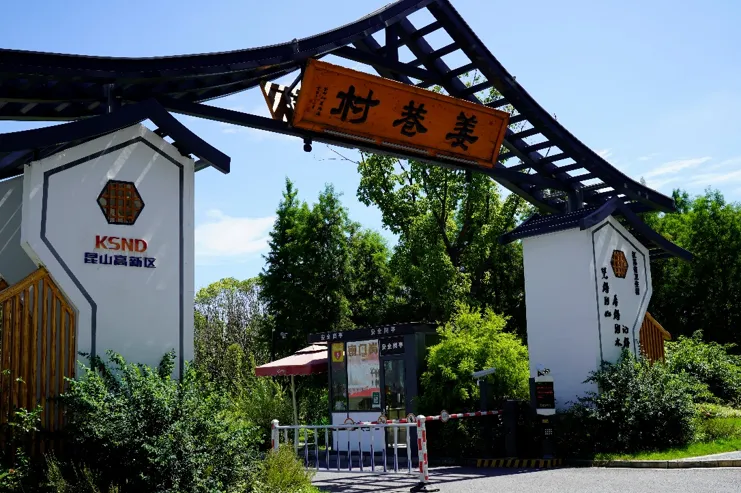
Liangzhu period settlements were not randomly scattered; instead, they formed clustered activity centers. The exhibition’s preface emphasizes a “Kunshan that bridges past and present and continues to grow.” Today, the High-tech Zone is a modern hub of urban development, yet 5,000 years ago, it already served as a regional settlement center. While the nature of this “center” has evolved, we are still building and growing on the very same land chosen by our ancestors millennia ago.
Huangnishan Site: Artifact Clues of the Maqiao Culture
Located in Huangnishan Village, Bacheng Town, this is a Maqiao Culture site. It yielded bronze arrowheads, pottery jars, and stamped-pottery fragments; it is a secondary deposit from an early Spring-and-Autumn-period Maqiao site.
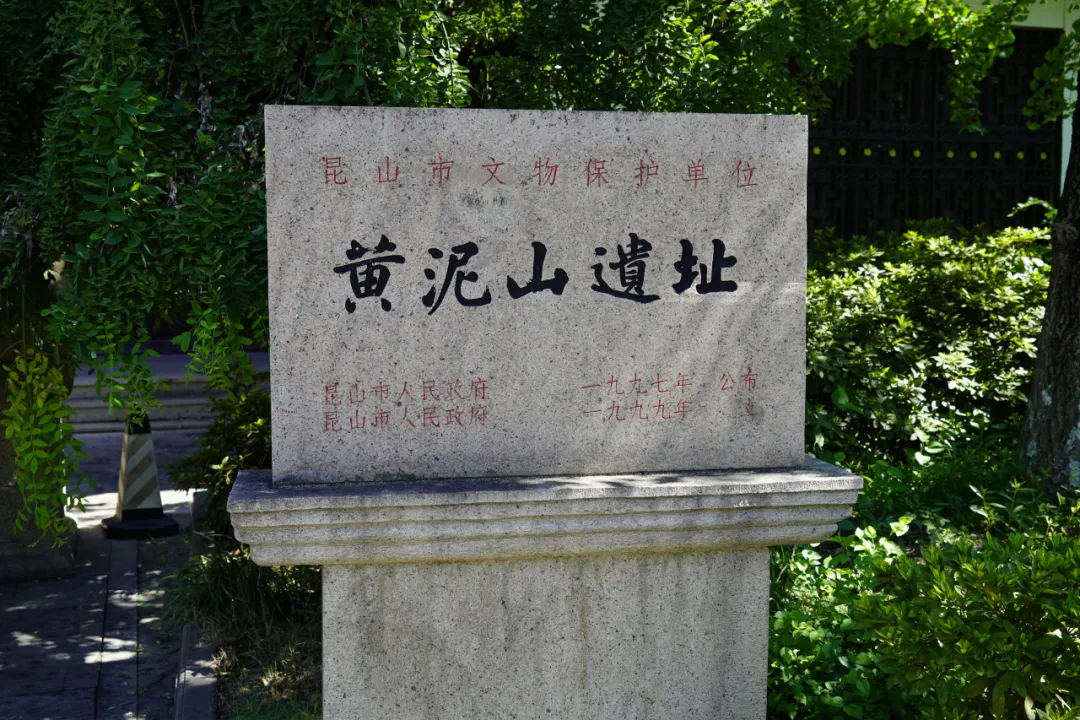
The exhibition notes that during the Maqiao Culture period (c. 3,000 years ago), natural disasters caused a temporary cultural decline. However, people maintained their settled lifestyles, as evidenced by the wells, ditches, and various tools found at sites like Chuodun. Viewed against this backdrop, the artifact fragments from Huangnishan take on greater significance. The bronze arrowheads offer insights into the technology and livelihood of the era, while the stamped pottery pieces reflect local craftsmanship. Together, these small clues allow us to catch a glimpse of ancient life.
Wucheng Site: Military Defense in the Water Network
Located in Wushentan Village, Bacheng Town, this site is a Wu state military water fort from the Spring and Autumn period. Traditionally attributed to the legendary strategist Sun Wu and laid out according to Bagua (Eight Trigrams) principles, it is the only excavated Wu military water fort of its kind in China.
This site adds a rarely discussed dimension to the traditional image of “Jiangnan water towns.” It reminds us that these complex water networks were used not only for farming, transportation, and daily life, but also as integral parts of a military defense system.
Jiangli Site: Layers of Overlapping Time
Located in Jiangli Village, Zhangpu Town, the Jiangli Site underwent rescue excavations in 2011. These excavations confirmed that its cultural deposits span the Majiabang, Songze, and Liangzhu cultures, as well as the Shang-Zhou, Han, Six Dynasties, and Tang-Song periods.
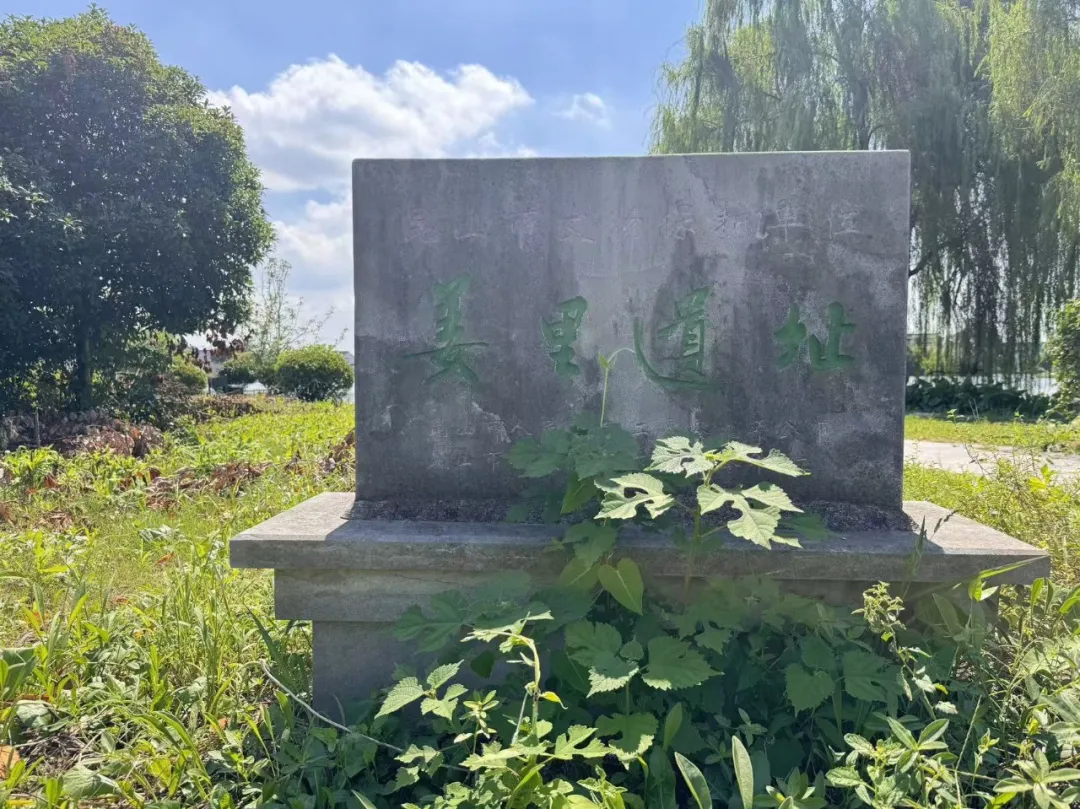
The site acts as an archaeological cross-section of time. The same location was repeatedly inhabited, modified, and built upon across different eras, leaving overlapping layers of human activity in the soil. The exhibition notes that Songze-era artifacts from Jiangli and nearby sites reveal a society heavily reliant on rice farming, alongside livestock and fishing. Furthermore, varying burial goods from this period mark the beginnings of early social inequality.
This rich history makes Jiangli a fitting endpoint for our site visits. It stands as a powerful testament to “continuity,” proving that Kunshan’s prehistoric settlements and agricultural roots did not simply vanish, but persisted and evolved through successive historical periods.
Map Making Process
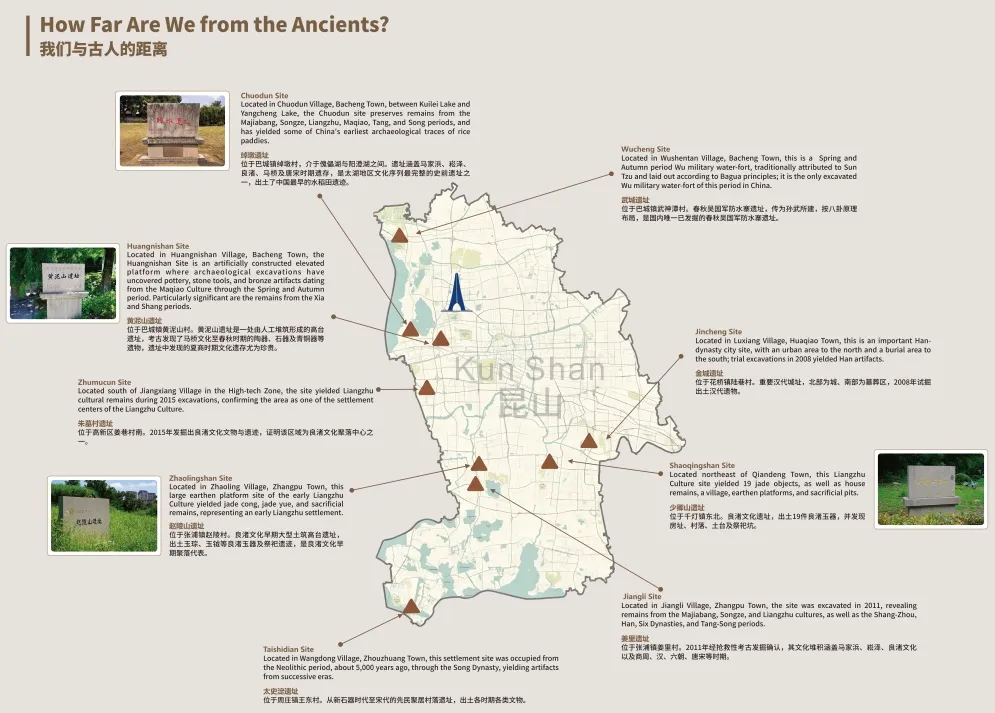
To understand the geographical distances between the DKU campus and these nine sites, we located and mapped them.
In public records, location information for the nine sites is often limited to the town or village, without standardized, precise coordinates. To facilitate mapping, we first identified the approximate location of each site using Baidu Maps and selected a representative point within the identified area. Because Baidu Maps uses the proprietary BD-09 geographic coordinate system, we then manually matched each location on a WGS84 map and recorded the corresponding coordinates to create point data compatible with ArcGIS. These coordinates therefore represent approximate reference locations rather than precise historical site locations. The Kunshan administrative boundary map was created using an administrative division dataset obtained from the China GEOSS Data Portal. ArcGIS Pro was then used for final map production because it supports detailed cartographic layouts, including labels, legends, and titles, as well as high-resolution export.
Further Reading & References
- The Chuodun Site in Kunshan (《昆山绰墩遗址》). Cultural Relics Press, 2011.
- Zhaolingshan: Excavation Report, 1990–1995 (《赵陵山:1990—1995年度发掘报告》). Cultural Relics Press.
- Majiabang (《马家浜》). Cultural Relics Press.
- Kunshan Farming (《昆山农耕》). Guangling Press.
- A Collection of Historical Town Gazetteers of Kunshan (《昆山历代乡镇旧志集成》). Guangling Press.
- Selected Maps from Old Jiangnan Gazetteers: Walled Cities (《江南旧志图选·城池》). Guangling Press.
Walking through these nine ancient sites scattered across Kunshan, we can understand that Kunshan’s profound heritage is hidden in every corner.
There are no magnificent buildings or bustling crowds. Plain heritage protection steles and ordinary earthen mounds connect thousands of years of Kunshan’s history and stories.
From early pioneers reclaiming land to plant rice, to the prosperous jade rituals of Liangzhu; from the armored cavalry of Wu and Yue, to the bustling urban life of the Han dynasty.
This land remains silent, inclusive, and endlessly thriving