
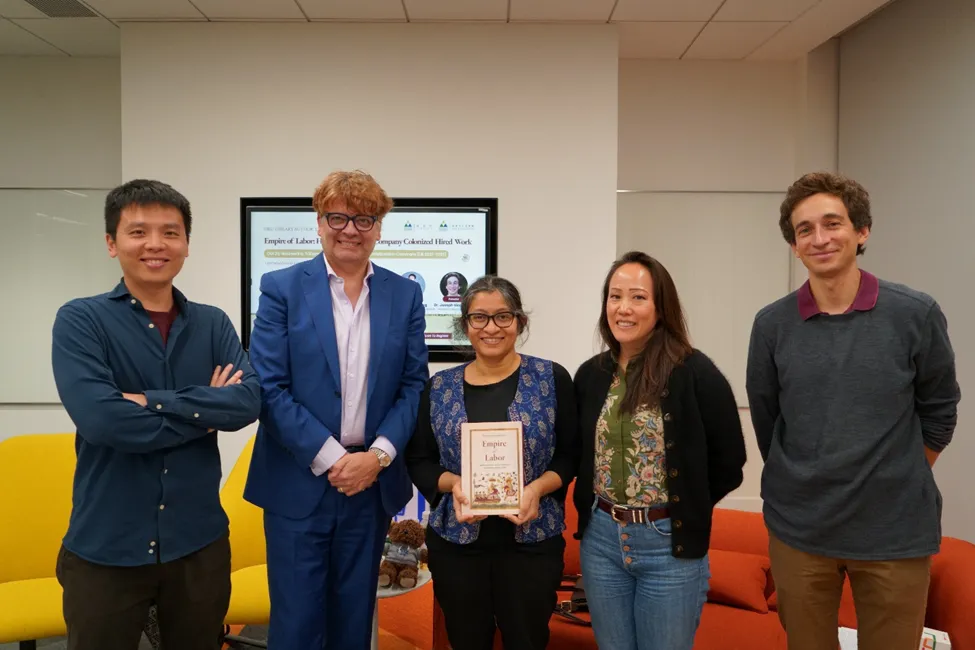
On October 29, 2025, Duke Kunshan University (DKU) Library and the Division of Arts and Humanities jointly hosted an author talk featuring Dr. Titas Chakraborty, Assistant Professor of History at DKU, to discuss her newly published book, Empire of Labor: How the East India Company Colonized Hired Work. The event attracted over 50 faculty, students, and community members interested in the intersections of labor, colonialism, and historical narratives.
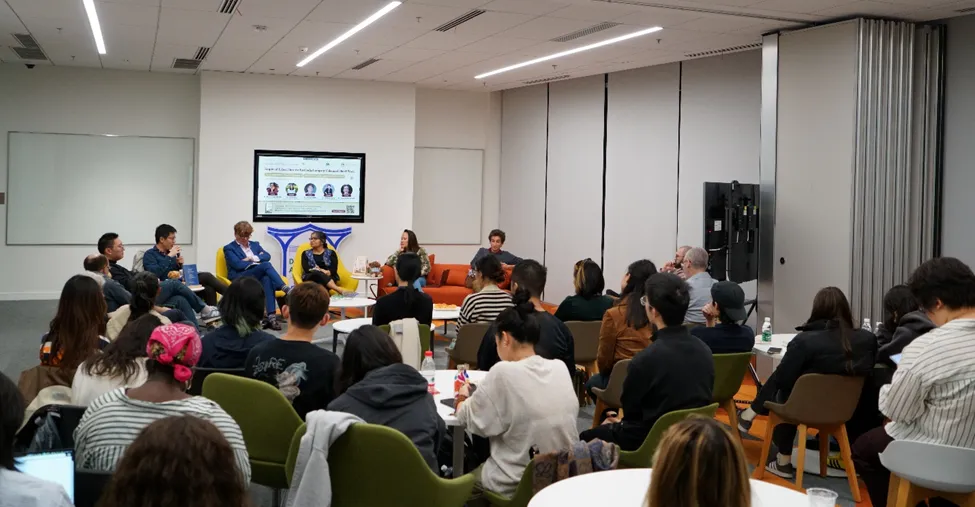
Dr. Chakraborty offered a groundbreaking perspective on the rise of English colonial rule in India. By focusing on the 17th and 18th-century Bengal, she demonstrates that wage work was already prevalent in the region prior to colonization. “What the colonial state actually did,” Dr. Chakraborty explained, “was radically change the conditions surrounding this form of work.”
Dr. Chakraborty detailed how the English East India Company, backed by its military, police, and legal apparatus, systematically reduced workers’ freedoms by dictating their hours, restricting their mobility, and limiting their ability to choose employers. This process, she argued, imposed a Eurocentric capitalist form of labor that would eventually brand the region as a source of the world’s cheapest labor.
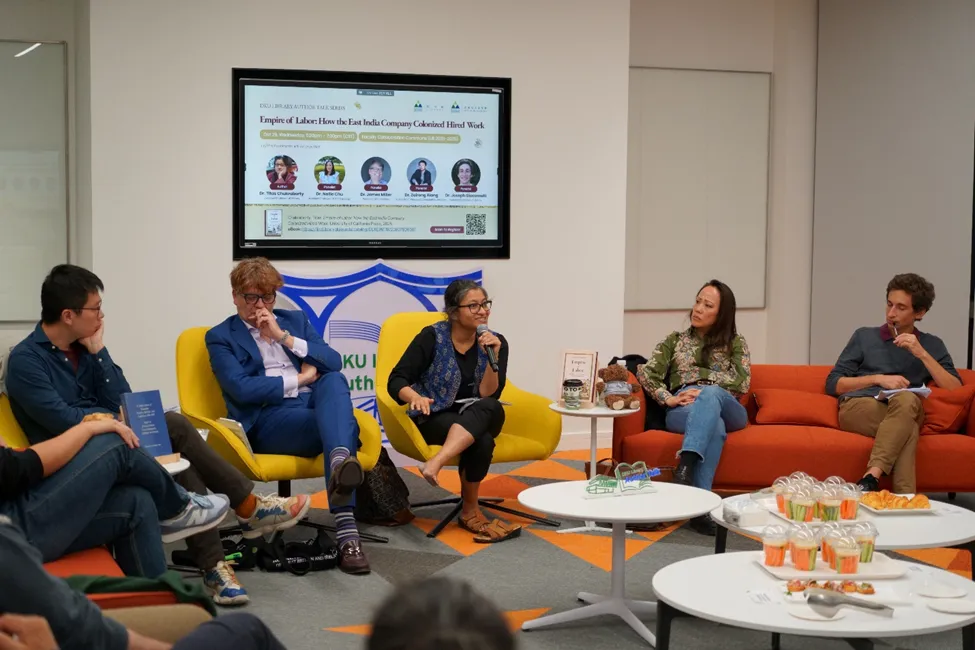
Subsequently, a panel of four DKU faculty members pushed the discussion into broader historical and theoretical terrain. Dr. James Miller, Professor of Humanities, applauded the work for its fusion of the ordinary world of labor with the extraordinary realms of religion and poetry, noting how these cultural narratives illuminate ideas of mobility and resistance.
Dr. Zairong Xiang, Associate Professor of Comparative Literature, situated the work within global labor history, observing that behind the triumphant narratives of globalization, the violence experienced by both indigenous and European workers was often “a word of condemnation” for those laborers.
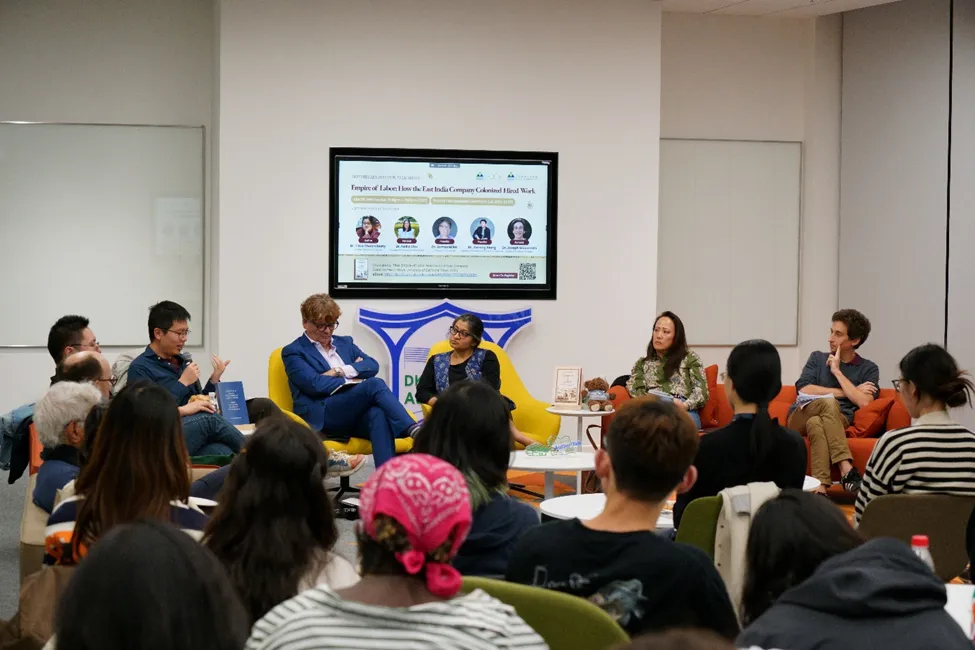
Turning to theories of globalization, Dr. Nellie Chu, Assistant Professor of Anthropology, remarked that the work challenges simple dichotomies (global/local, internal/external, Asian/European) by revealing how they were fundamentally shaped by the daily struggles and violent encounters of the colonial context.
Finally, Dr. Joseph Giacomelli, Assistant Professor of History, raised questions about the co-constitutive relationship between colonialism and capitalism, noting that the book reveals their entanglement to be “much deeper and much more intricate” than often assumed, as the two are intertwined through law, technology, and emerging racial hierarchies.
Responding to the panel, Dr. Chakraborty elaborated on her innovative methodological approach of using literary texts alongside colonial archives. The book discussed how colonial centralization created a system of racialized legal structures and land policies that disciplined workers to shape colonial modernity.
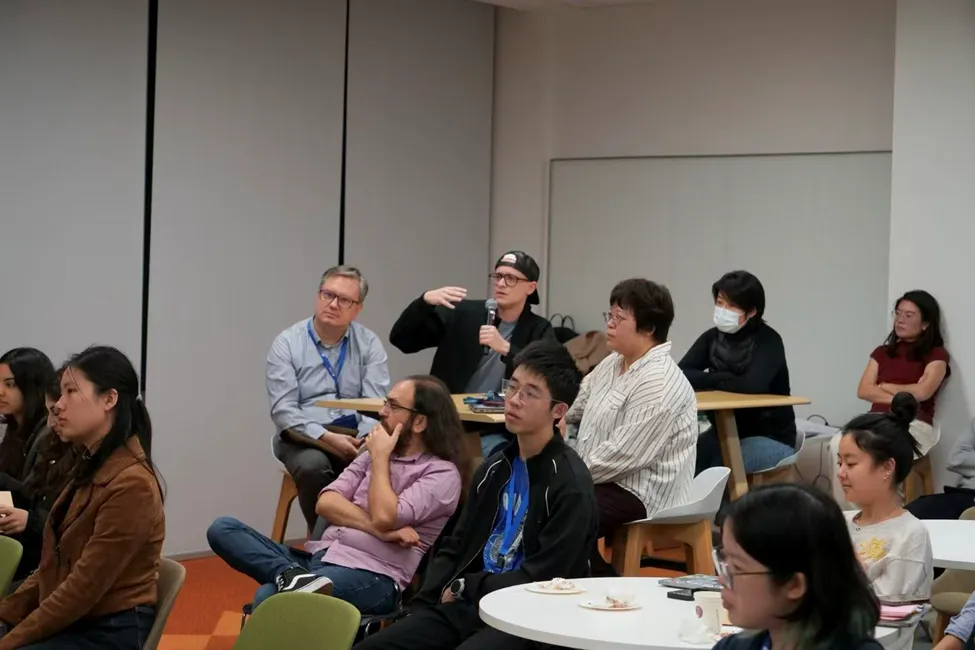
The event concluded with a vibrant Q&A session, where attendees engaged with the author and panelists on topics ranging from the role of religious communities to the parallels between historical labor resistance and contemporary global labor dynamics. The discussion showed how combining different fields of history can clarify both past events and the systems that still shape the modern world.
Explore the Book:
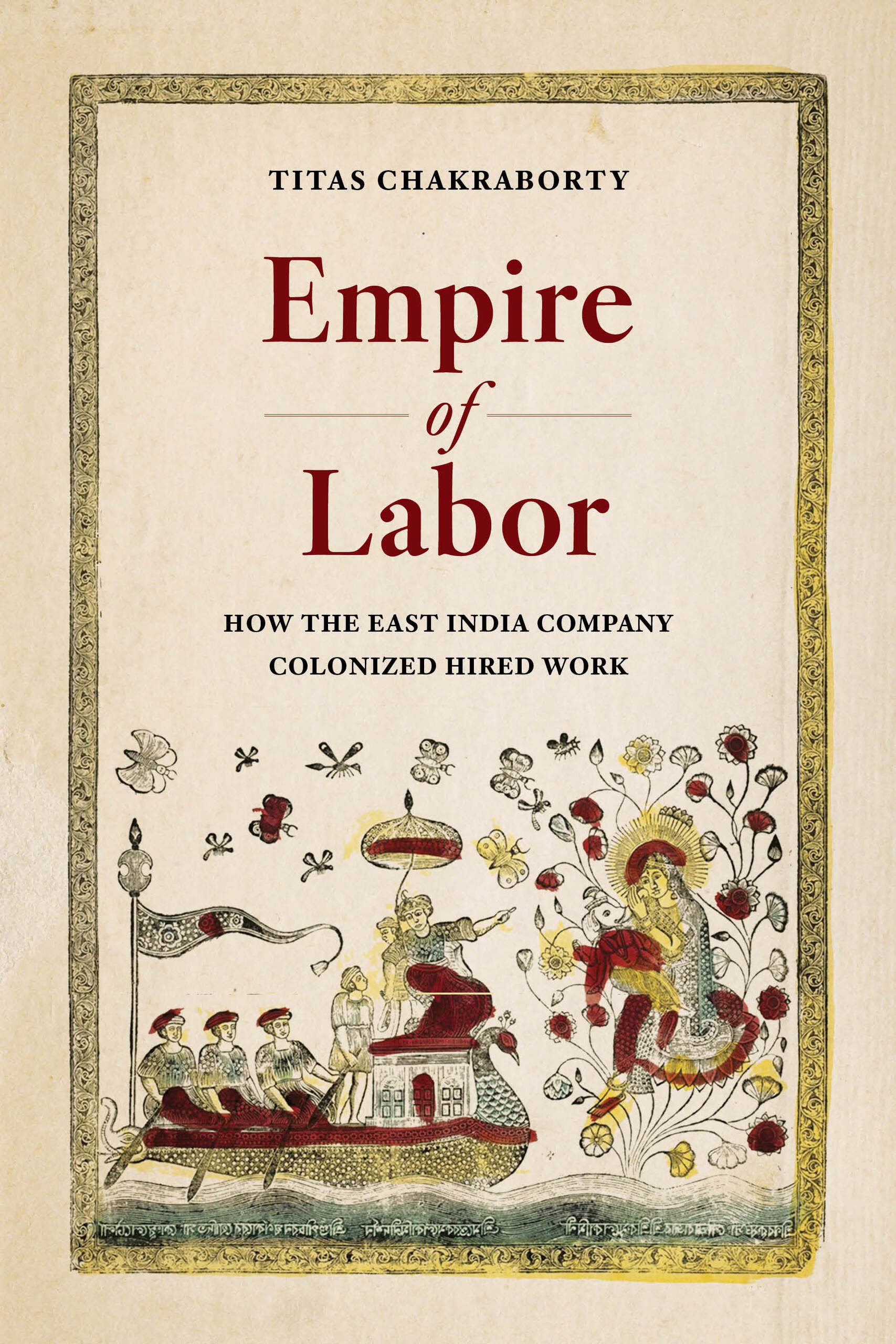
Empire of Labor: How the East India Company Colonized Hired Work
- Author: Titas Chakraborty
- ISBN: 9780520399631
- Publisher: University of California Press
- Year of Publication: 2025
- Location: 1st Floor Faculty Work
- Call number: HD8684 .C43 2025
- eBook: https://find.library.duke.edu/catalog/DUKE99119723907908501
Content & Photo: Cai Yan