
Every April 23, we mark World Book Day — a day to celebrate reading, writers, and the joy of books. In our DKU community, reading is never a holiday-only event. It happens with every daily borrowing from our library and every monthly sharing in our “One Month One Book” activity.
One Month One Book
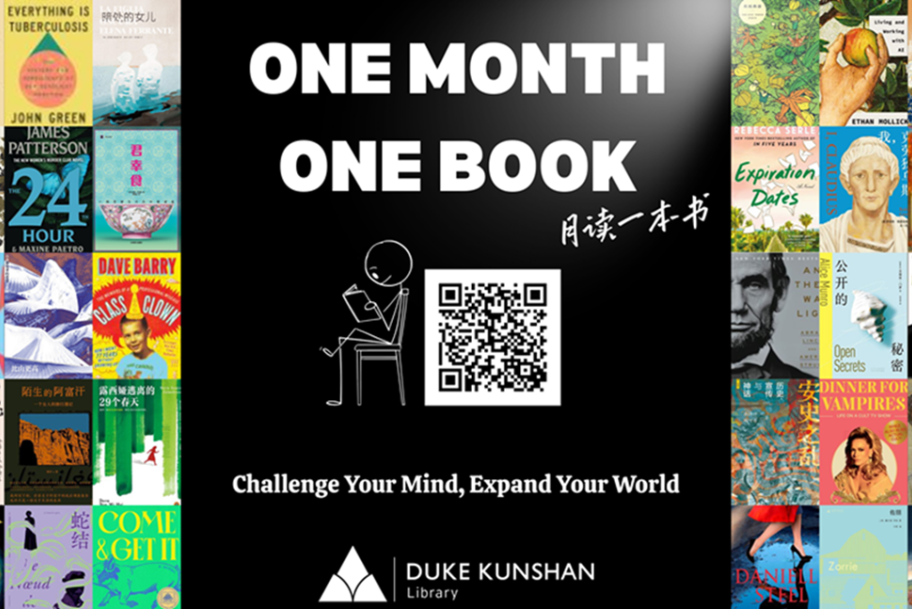
In October 2025, DKU Library launched the “One Month One Book” initiative, designed to encourage participants to complete one book each month through a cumulative reward system that supports and celebrates their reading journey. The library provides incentives to recognize progress, and compiles all contributions into a monthly digest of our collective reading experience — sparking inspiration and connecting our community through stories. As of today, we have received 233 book submissions from our faculty, students and staff from 97 unique participants, 43 of whom have contributed multiple times. This suggests that a significant portion of DKU’s book-loving community sustains a regular reading habit.
The recommendation spans current events — Alessandro Ceschi’s I Made a Dream in Chinese and Jonathan Haidt’s The Anxious Generation; classics like Dostoevsky’s The Brothers Karamazov; Nobel Prize-winning works such as Márquez’s One Hundred Years of Solitude; popular film-adapted books like Liu Cixin’s The Three-Body Problem and Ma Boyong’s The Litchi of Chang’an; and specialized titles including Mathematical Foundations of Reinforcement Learning and Demgenski’s Seeking a Future for the Past.
Book Reflection from the Readers
We have read every thoughtful reflection submitted by our participants. For example, Kenneth Richie, class of 2029, shared this about If Cats Disappeared From the World:
“I personally enjoyed the message this book gives its readers. The idea of trading something from the world for another day of life. It gives ideas of minimalism. Where the main character removes things that he enjoys, yet finds more fulfilment in those days than his years of life before hand. It makes you reassess both what you do in life and what you truly value before you die. The satire was hit or miss throughout the story though, sometimes you’ll be dying laughing and other times you’ll be stone faced. I did start to really hate the main character and the authors way of writing in the later half of the book. It’s almost like all the character development shown earlier got thrown out the window for the plot. Making them clash instead of working together to finish the story in a satisfying way. I do believe the ending was a great choice though and would be satisfying exactly what the author was seeking for every reader.”
She appreciates the book’s philosophical core about minimalism and life’s true value, even while finding the later character development frustratingly inconsistent.
Professor Jason Todd shared a particularly interesting reflection on reading the Harry Potter and the Prisoner of Azkaban with his son:
“The consequences of our actions are always so complicated, so diverse, that predicting the future is a very difficult business indeed.” – Albus Dumbledore.
Although I started rereading the Harry Potter series with my younger son, he has now risen to the challenge is reading them by himself, ever so slightly behind my pace. Although these books are a delight to read aloud, I think any book is better when you can enjoy it in some quiet solitude – and then discuss it with someone else. So I’m now happily reading the series a second time by myself, but with ample discussion just a few days delayed, as my son catches up.
As a social scientist, I was impressed by the above quote from Dumbledore. Part of our job is explaining the past – not necessarily the deep past, but at least things have already happened, for that’s the province of cause and effect. Another part is predicting the future, on the basis of a causal understanding gleaned from the past. But given that social, economic, and political systems are fundamentally complex systems, prediction is basically a fool’s errand. So I was tickled by Dumbledore’s little quip about the hurdles of prediction.”
As a dad, he shares the story with his son but lets him read at his own pace. As a scholar, he smiles at Dumbledore’s wise words — because even experts can’t predict the future.
Voice from the Readers
We interviewed three individuals who persistently engage in reading and book sharing, inquiring about how they sustain this habit and what significance reading holds for them.
Prof Liuchun Deng, an avid and wide-ranging reader, shared the following: “Reading began for me as something tied to long commutes, but at some point it became part of my daily routine. On days when I do not commute, I feel the absence of it keenly, as though something essential were missing. In an academic world that is becoming ever more professionalized and departmentalized, reading may be one of the few ways to step outside narrow specialization. It helps keep one’s eyes open, or at least not completely shut, to a world far broader, richer, and more integrated than academia often allows us to recognize.” He also shared his fondness for comics: “I read comics as a child, usually pirated copies borrowed from little rental shops. As a grown-up, I still read them, and through comics I keep discovering beautiful minds and remarkable stories. I always feel this world desperately needs comics.”
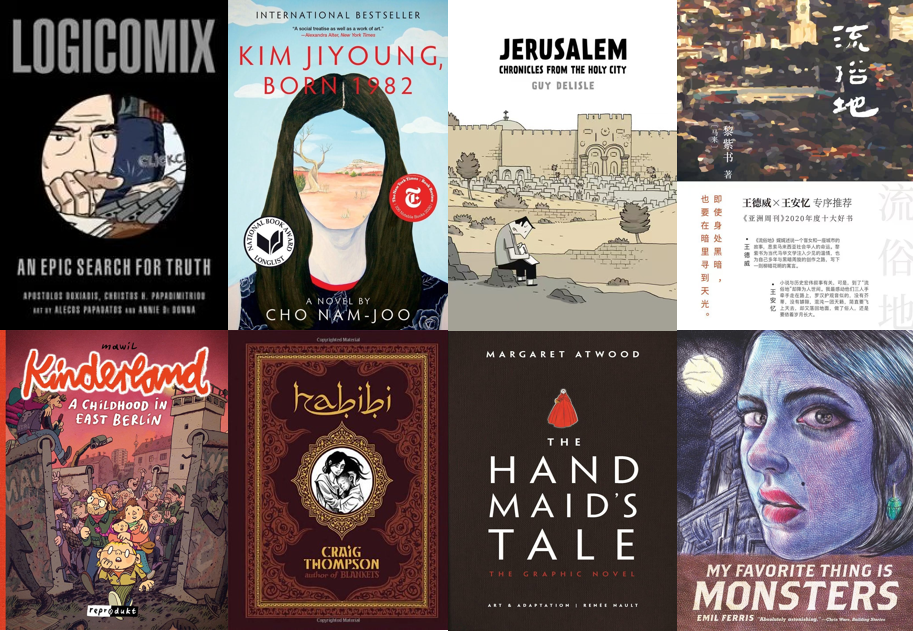
From daily ritual to intellectual freedom to the quiet joy of comics—reading, in all its forms, is how we keep our eyes and hearts open to the world.
Honey Huang, one of our passionate and energetic colleagues, shared her perspective: “Reading, to me, is a quiet slipping into other lives, as if I could momentarily inhabit the thoughts of strangers and return unchanged, though I never quite do. It feeds a restless curiosity that drifts from the habits of crabs along distant Chinese shores to the shadowed musings one imagines Franz Kafka carrying through an ordinary day. Somewhere along the way, something gently rearranges itself within me, almost unnoticed. The mundane softens, then sharpens, and even the smallest moments begin to carry a quiet gravity, as if they are waiting to be understood. Perhaps the simplest wonder is that it is all freely chosen, to open a book, to enter and leave at will, to linger or turn away, a quiet kind of freedom that keeps drawing me back.”
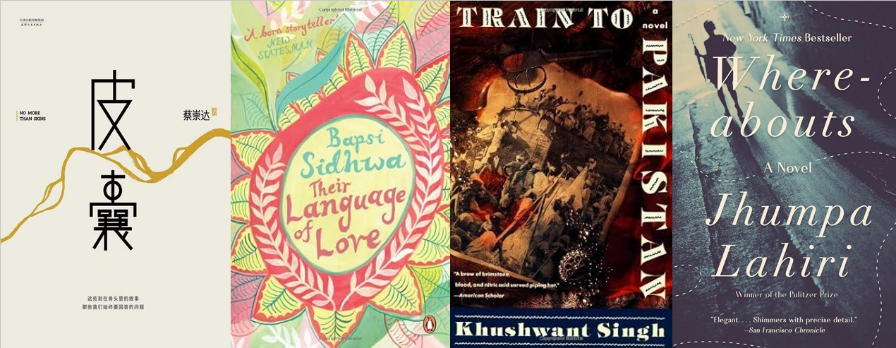
Reading is a quietly transformative freedom—we slip into other lives and return not quite the same, yet the choice to open a book is always our own.
One of our dedicated and capable student workers, Hana Okimoto, told us: “I love to read, and getting to work in the library and being surrounded by books has motivated me throughout this school year to incorporate reading into my schedule on a regular basis. Reading fiction by authors from other countries has significantly helped broaden my worldview, and I believe has made me more empathetic when it comes to cultural misunderstandings, especially on this very diverse campus. Reading is also a very calming exercise for me, especially when I’ve been spending too much time on my phone or computer. It can also be very entertaining and creatively stimulating. Happy World Book Day!”
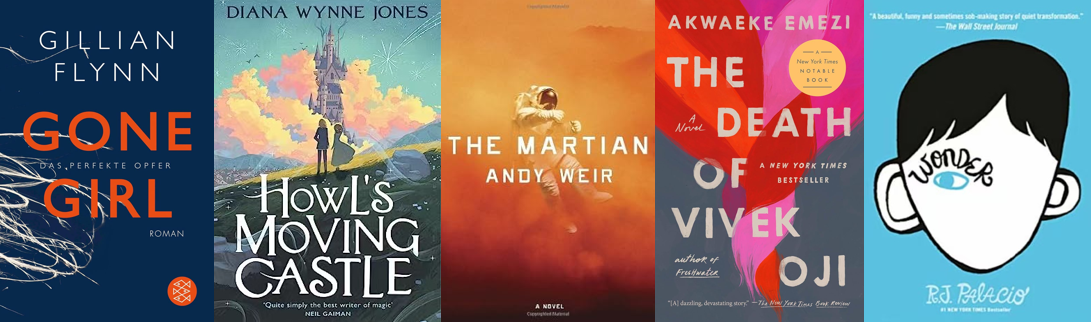
Working among books doesn’t just build empathy and broaden perspectives—it turns reading into a peaceful, joyful habit that makes any diverse campus feel a little more connected.
Stories like these remind us that reading, at its heart, is less about grand declarations and more about small, consistent acts of engagement. What truly matters is the everyday rhythm of reading—the quiet moments of turning pages, the unexpected recommendations shared between peers, and the growing willingness to open up about how a book has moved us. Reading here is not a race for higher numbers, but a shared journey of discovery. Whether it’s a borrowed library book or a well-worn personal copy, each page turned brings us closer to new ideas, different lives, and perhaps a clearer view of our own. It’s not about how many books we finish—but how many moments we spend truly reading, reflecting, and connecting.

Let us conclude with this reflection: ‘Every page you have ever read merges into a river called the self, quietly yet profoundly altering the course of your life.’ We welcome you to keep submitting your reading stories—and we’ll keep sharing, keep reading. One Month One Book, always. Click “Read More” at the end to view the complete book recommendations.